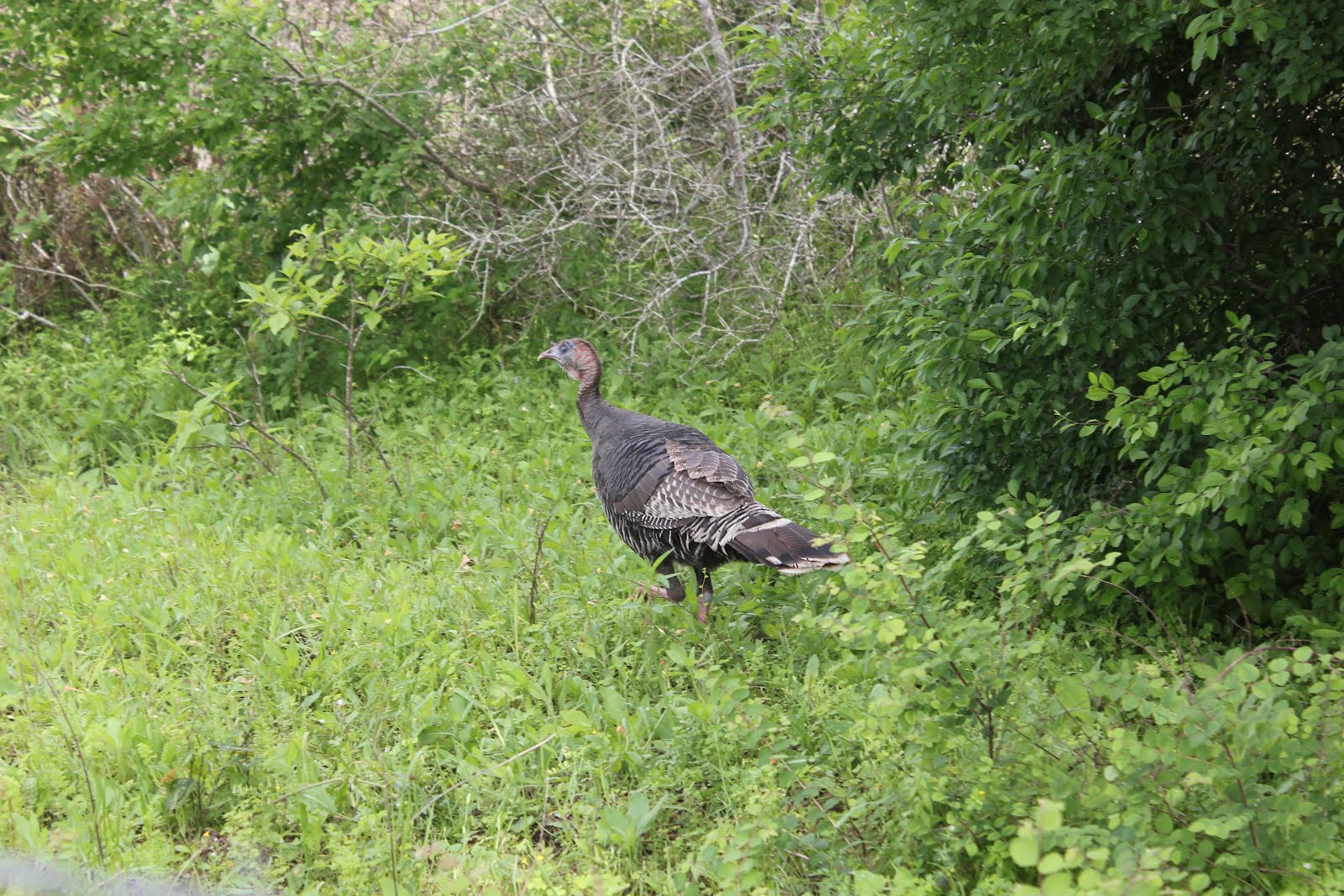
I visited the beautiful BALCONES CANYONLAND NWR this week and wanted to share my experience with all of you faithful Blog friends! The BCNWR is part of our national parks system and located in the far upper NW quadrant of the Lake Travis area, on the outskirts of Austin, Texas. 

 This refuge is home to the endangered BLACK CAPPED VERIO and GOLDEN CHEEKED WARBLER, for which there is currently much ongoing research and habitat protection plans to secure the future of the species: http://www.fws.gov/refuges/profiles/index.cfm?id=21561

 This refuge is home to the endangered BLACK CAPPED VERIO and GOLDEN CHEEKED WARBLER, for which there is currently much ongoing research and habitat protection plans to secure the future of the species: http://www.fws.gov/refuges/profiles/index.cfm?id=21561
 At the main entrance just west of the city of Lago Vista you can take a short hike and see a beautiful spring fed pond and typical rocky limestone outcrops. The springs were only trickling when I was there and recent years of bad drought have left much of Texas praying for rain. The springs were at least flowing somewhat and not completely dry although many of the stream beds were dried up.
 Since this whole refuge is focused on the preservation of 2 little bird species I though I better at least keep my eye out for one or the other while on the trails. The ranger at the entrance informed me that the Warblers had probably migrated already, but that I should be able to see some Vireos if I was lucky. He was kind enough to play me the sounds of a BCVireo on his handy dandy iphone bird call app (!) which I was thankful for because I am sure I would not have been able to identify them through looks alone. I am fairly certain I heard those little flitty birds calling to each other the whole time I was hiking the main trail and sure enough I could never could get a good look at the actual birds! They were small, they were fast, and they were good at hiding just out of view! They mainly stayed in the tree canopy but their call is a fairly unique song and not too difficult to identify.
  Since it is mid August right now, it is HOT HOT and HOT (typical Texas) and not the best weather for a casual hike in the hill country, but I still enjoyed myself and because of the time of year all of the grasses were seeding as were the trees. Central Texas has some of the most beautiful Mesquite Trees you will ever see, and on this day I got a pretty good view of a mature specimen (above). Several areas of the trail were littered with Mesquite beans that had fallen and many of the branches were still heavy with more pods. There is a funny thing about Mesquite beans - they say they taste like candy to a horse and are simply irresistible to them. But horse owners beware! as ingestion of the bean pods can change the intestinal flora (temporarily) and lead to quite a belly ache later on. (Don't tell the horses though - they luv 'em!).
 One of the really cool parts of visiting west central Texas is the hill country topography. This is a view from along the road on the western edge of the NWR. The road is cut right through the chalky limestone and the drive takes you through some of the most gorgeous hilltops (mini mountains?). The views are breathtaking and the air is filled with the smell of ashe juniper. It's really unlike anywhere else I've been. This whole hill country area is part of an ancient geological formation called the Llano Uplift which is basically a huge fault line that runs from east of Dallas all the way down to far SW Texas below San Antonio. The shift in the earth's crust caused the 'lift' which created the eastern boundary of the escarpment and the rolling hills to the west. Because of the honeycomb limestone formations (under the earth) this part of Texas is known for it's multiple springs and cave systems. Unfortunately the rocky limestone also makes it very susceptible to environmental pollutions entering the water table. Unlike a sandy substrate, limestone doesn't filter water very well. Instead of filtering down through sand, rainwater just travels along the surface of the ground until it meets a limestone crack or hole, then drops down and travels the fault line deep underground and straight into the water table. If you drive the Austin area highways you will see signs designating environmentally sensitive watershed areas.

And of course, I just had show this sign cautioning hikers to beware the rattlesnakes! I'm SURE they have Rattlesnakes in this hill country territory (along with Coral snakes and other assorted beauties) - but luckily I didn't run into any on this trip!  So until next time, Happy Nature Adventures and may your hikes be free from Rattlers!
 So until next time, Happy Nature Adventures and may your hikes be free from Rattlers!